Build an economy
Assign working-age citizens to limestone, grain, and obsidian. Feed the population, expand capacity, and decide what can safely be committed to the monument.
 PHRATEKETERNAL DYNASTIES
The Ascension race
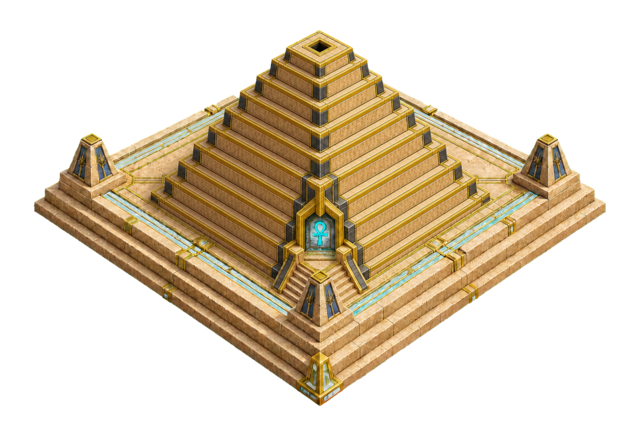
Every dynasty builds its own five-phase pyramid in the same live world. The first ruler to complete the Ascendant Capstone wins, and the active world freezes immediately.
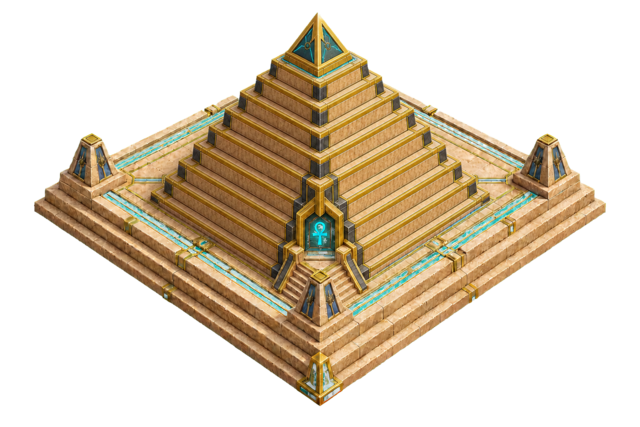
One race, rival monuments
Each village develops its own pyramid. The map and rankings show every rival’s progress, so the decision to build, defend, negotiate, or raid depends on the state of the whole world.
Assign working-age citizens to limestone, grain, and obsidian. Feed the population, expand capacity, and decide what can safely be committed to the monument.
Rankings show the race taking shape. Trade, gift resources, negotiate a seven-day non-aggression pact, or prepare troops when a rival becomes a threat.
Successful raids may target stores or damage a rival’s most advanced pyramid work. Defence is part of construction: progress alone does not make it safe.
Five phases of Ascension
The phases must be completed in order. Each one is larger than the last, forcing a dynasty to scale its workforce and reserves as the race intensifies.
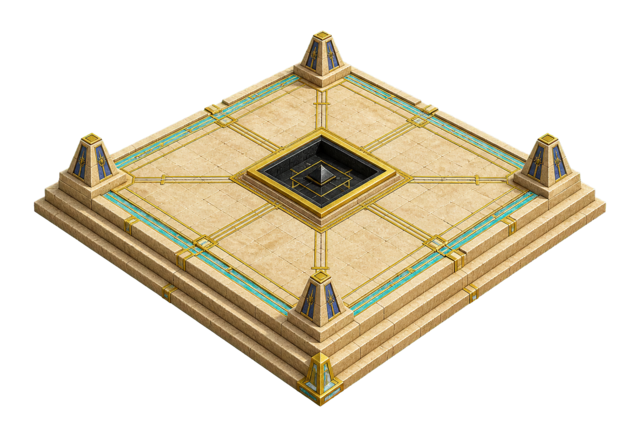 01
01
Phase 1
Set the first stones and turn a young village into a contender.
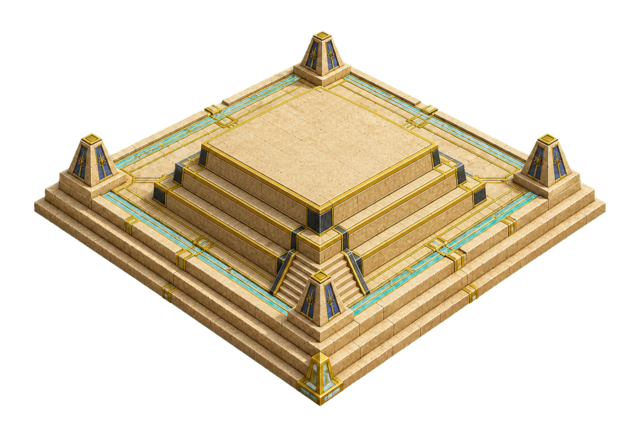 02
02
Phase 2
Broaden the monument while keeping the fields and quarries supplied.
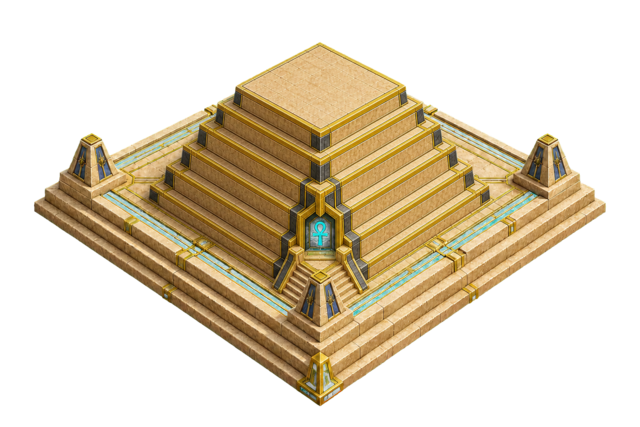 03
03
Phase 3
Cross the point where every rival can see the shape of your ambition.
 04
04
Phase 4
Sustain an immense crew while protecting years of accumulated work.
05
Phase 5
Complete the Ascendant Capstone and win the world for your dynasty.
How progress is made
Pyramid construction is a deliberate commitment, separate from ordinary building upgrades. You reserve stone and glass for the active phase, then assign a crew from the same working-age population your economy needs.
Progress continues with elapsed time while both a crew and stored construction power remain. If the reserve runs dry, the crew is released until you commit more material.
See the structures behind the economy →One limestone supplies one power; one obsidian supplies two.
Choose between 5 and 200 available working-age citizens.
Each worker contributes 12 power per hour before active modifiers.
Only the first unfinished phase can receive new work.
The end of a world
A world does not end because a calendar reaches a promised date. It remains active until a dynasty completes all five phases.
Dynasties produce, build, trade, research, negotiate, raid, and advance their own monuments.
The ruler who finishes the pyramid first wins immediately.
The world is frozen immediately, preserving the final state and the victorious dynasty.
Seven real days after victory, the frozen world moves into the archive.
The race for Ascension is open
Build your economy, track rival monuments, and decide how many citizens and resources your dynasty can commit to victory.
Optional analytics
Analytics help us understand which public pages and controls are useful, whether visits lead to account creation or sign-in, which gameplay actions succeed or fail, and where errors happen. We use random browser and visit IDs that are not linked to your Phratek account. Saying no will not affect the website or game.
Names, email addresses, passwords, account, village, world or rival IDs, messages, form values, map coordinates, raw errors, query strings and IP addresses are not added to the analytics dataset.
The random browser ID rotates after 30 days. Accepted raw events are retained centrally for 90 days. When delivery must be retried, the unsent browser queue is capped at 1,000 events or 5 MiB.